
Home/Services/Marine & Port/Bunker fuel — NEOM Port
MP·01
MARINE & PORT SERVICES
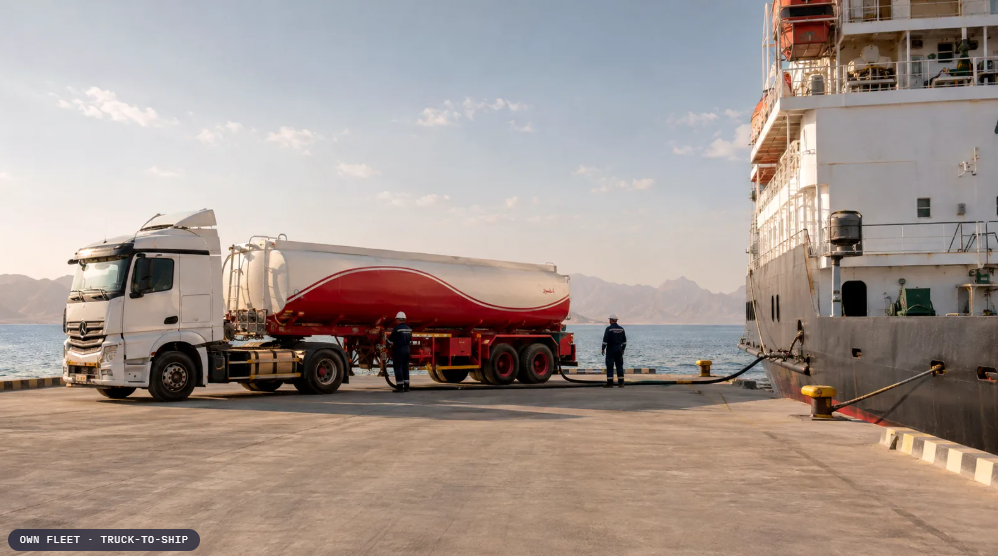
Marine fuel delivered by truck to vessels alongside at NEOM Port — from a supplier based minutes away in Duba. Nominate directly or through your agent; we confirm availability, price and a delivery window, handle the port’s procedures as part of the job, and complete a metered transfer with signed paperwork before the truck leaves the quay. Grades and quantities are confirmed per order, and the same trucks refuel shoreside equipment working the port.
MP·01
NMP
By Truck
Duba
FIG.01 BUNKERING SEQUENCE
Pick the kind of caller and run the sequence — the truck positions, the hose connects, the tank gauge climbs, and the delivery closes with paperwork. Illustrative; every real transfer follows the nomination.
drag to rotate · scroll to zoom
3D isn't available in this browser. The sequence: the bunker truck positions alongside the vessel, hoses are connected and checked, the transfer runs against the nominated quantity with the meter witnessed, and the delivery note is signed before departure.
Port-based working vessels that refuel on a rhythm, close to the berth they work.
FIG.02
WHAT A DELIVERY INCLUDES
STAGE·01
You send the vessel or equipment, the quantity and grade required, and the window — directly or through the agent handling the call. We confirm availability, price and timing back in writing, so the vessel’s plan is built on an answer, not an assumption.
STAGE·02
NEOM Port is a working project gateway: berth time is planned and cargo operations come first. We agree the delivery slot with the agent, align it with the port’s procedures, and arrive inside it — because our trucks start minutes away, not hours.
STAGE·03
The truck positions alongside with the vessel’s manifold in reach, hoses and fittings are checked before connection, and the transfer area is kept clear for the duration. Cargo work on deck continues; the fuel doesn’t interrupt the call.
STAGE·04
The transfer runs against the nominated quantity with the meter available to be witnessed by the vessel’s crew. Start and stop are agreed with the receiving officer — no fuel moves without someone on the ship saying so.
STAGE·05
Quantity delivered, product supplied and timing are recorded and signed by both sides before the truck leaves. Your operator gets paperwork that survives an audit, not a verbal total.
STAGE·06
Hoses are drained and secured, the quay is left as it was found, and the port’s exit procedure is followed. The next delivery starts with the port glad to see the truck back.
FIG.03
WHO WE FUEL AT NEOM PORT
CALL·01
Vessels discharging megaproject cargo on a schedule that leaves no slack for a late fuel truck.
CALL·02
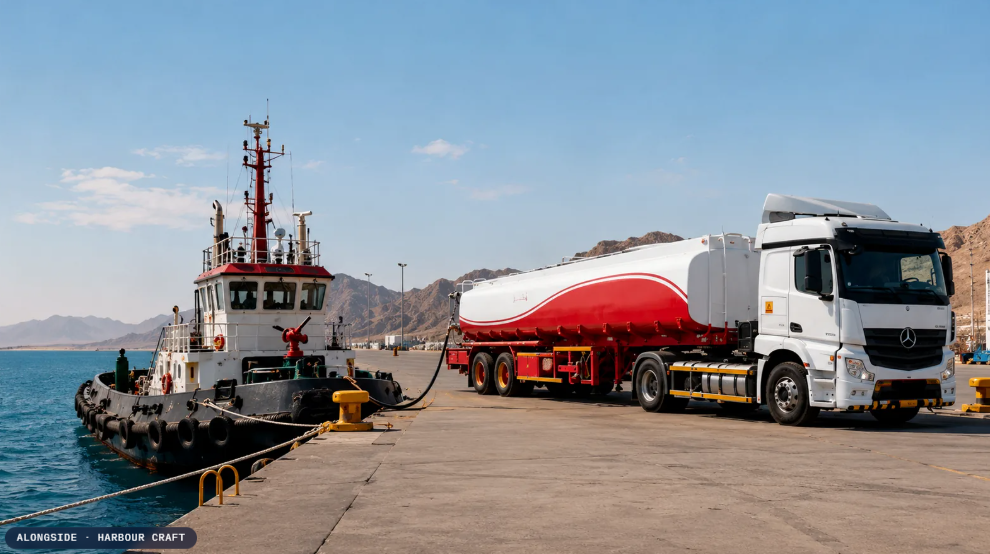
The craft that keep the port moving — fuelled on a rhythm agreed with their operator.
CALL·03
Workboats and crew transfers serving coastal construction along the NEOM shoreline.
CALL·04
Dredging, survey and marine-works spreads that need fuel where the work is, when the weather allows.
CALL·05
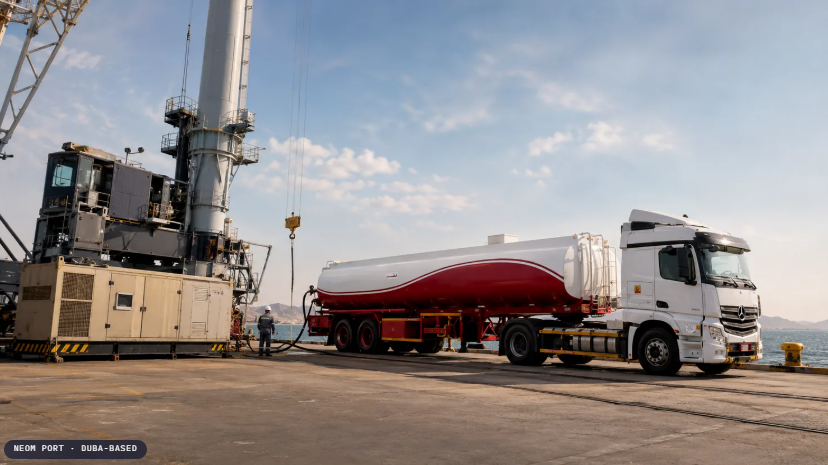
Cranes and plant working the quay — same trucks, same paperwork, one order.
CALL·06
One local counterparty who answers the phone and shows up — for every principal you handle here.
FIG.04
THE DISCIPLINE
Anyone can quote a price for fuel. What a vessel operator actually buys is a transfer that happens inside a controlled port, inside a fixed window, without incident and with paperwork that holds. That is a discipline, and it looks like this:
Nomination confirmed in writing
Vessel, quantity, grade and window read back and confirmed — the delivery is built on the same numbers the operator is planning with.
Window agreed with the agent
The slot is set against berth plans and cargo operations, not against our convenience, and the truck is staged to hit it.
Truck and hoses checked before entry
Equipment is inspected before the port gate, not on the quay — a failed fitting discovered alongside is a lost window.
Transfer controlled from the ship
Connection, start, rate and stop are agreed with the receiving officer, and the meter is there to be witnessed.
Paperwork signed before departure
Quantity, product and timing documented and countersigned — the delivery ends on paper, not on a handshake.
Quay left clean, exit by the book
Hoses drained, area cleared, port exit procedure followed. Reputation inside a port is a supply capability.
FIG.05
DECISION GUIDE
| Situation | Best Arrangement | Why |
|---|---|---|
| Single call at NEOM Port | One nomination, one delivery (MP·01) | Confirmed against the vessel's window; our Duba base keeps the response short. |
| Craft working the port daily | Recurring supply on an agreed rhythm | Standing coordination beats re-negotiating every top-up; one counterparty, one account. |
| Call at Jeddah instead | Bunker fuel — Jeddah Port (MP·02) | Same discipline in the Kingdom's busiest gateway, with gate and access procedures handled. |
| Vessel + shoreside works | Combined vessel and equipment order | One truck programme covers the ship and the quay plant — one delivery record for both. |
Unsure which fits? Send the situation as it is — the marine team answers with the arrangement, not a menu. Describe the call →
WHY IT MATTERS
Fuel that arrives after the window isn't cheap at any price. Our trucks start minutes from the gate — that's the product.
Duba · NEOM Port — NEOM-approved vendor, coordinated with your agent.
FIG.06
HOW TO ORDER
STEP 01
Vessel or equipment, quantity, grade if known, and the window — direct or through the agent.
STEP 02
Availability, price and delivery slot confirmed back in writing; port procedures handled by us.
STEP 03
Metered transfer inside the window, paperwork signed, quay left clean.
FIG.07
VERIFIED REGISTER
APPROVAL
REGISTRATION
BASE
DELIVERY MODE
GRADES & QUANTITIES
DOCUMENTATION
HSE
Certificates and classifications, packaged for tender and vendor-registration files, come with each quotation and on the company facts page →
FIG.08
RELATED SERVICES
MP·02
The same supply discipline at Jeddah Islamic Port — single calls, urgent top-ups and agent programs.
JED
TL·02
Cargo off the quay and onto the road — containers, steel and project freight nationwide.
KSA·NEM·RSC
TL·06
Closed warehouse (1,200 m²) and open yard minutes from the port, for cargo between movements.
DUB·TBK
ALL
The full register across transport, marine, environmental and industrial divisions.
GROUP
FIG.09
SUPPLY REQUEST
Vessel, quantity and window — we confirm availability, price and the slot back. About 60 seconds.
Your request goes to the marine supply team. Vessel and commercial information is treated confidentially.
A real reply
Availability, price and a slot — confirmed in writing.
Minutes from the gate
Duba base means the window is ours to hit, not to hope for.
Paper that holds
Metered transfer, signed documentation, every delivery.
PREFER TO TALK?
FIG.10
QUERIES
Send a nomination — vessel, quantity, grade if known, and the delivery window — directly or through the vessel's agent. We confirm availability, price and a slot in writing, handle port access, and deliver truck-to-ship alongside.
Send the remaining window and we answer against it honestly. Because our base is in Duba, minutes from the port, short-notice requests are often workable — but we confirm before you plan on it rather than promise and miss.
Vessel or equipment name, the approximate quantity, the grade if you know it, the window or ETA, and who is handling the call. Anything missing can follow — an incomplete nomination still gets a same-conversation answer on feasibility.
The transfer is metered and the meter is available to be witnessed by the vessel's crew, with start and stop agreed with the receiving officer. Quantity, product and timing are then recorded and signed by both sides before the truck leaves.
Equipment is checked before the truck enters the port, the transfer area is kept clear, connection and rate are controlled with the ship, and the port's own procedures apply throughout. Documented HSE practices back the delivery, with certificates provided per quotation.
Yes — support craft, workboats and marine-contractor spreads operating from NEOM Port are a core part of the work, on single orders or a recurring rhythm agreed with the operator.
Yes. Diesel for cranes and plant working the quay can ride on the same delivery programme as the vessel supply — one order, one truck schedule, one set of records.
Distance is risk. A supplier trucking fuel from hours away needs everything to go right; ours starts minutes from the gate, so a shifted berth time or an early completion is an adjustment, not a crisis. For a port built around project schedules, that margin is the service.