
TL·05
Part of Transport & Logistics
Boom-truck lifting: one rig lifts and carries.
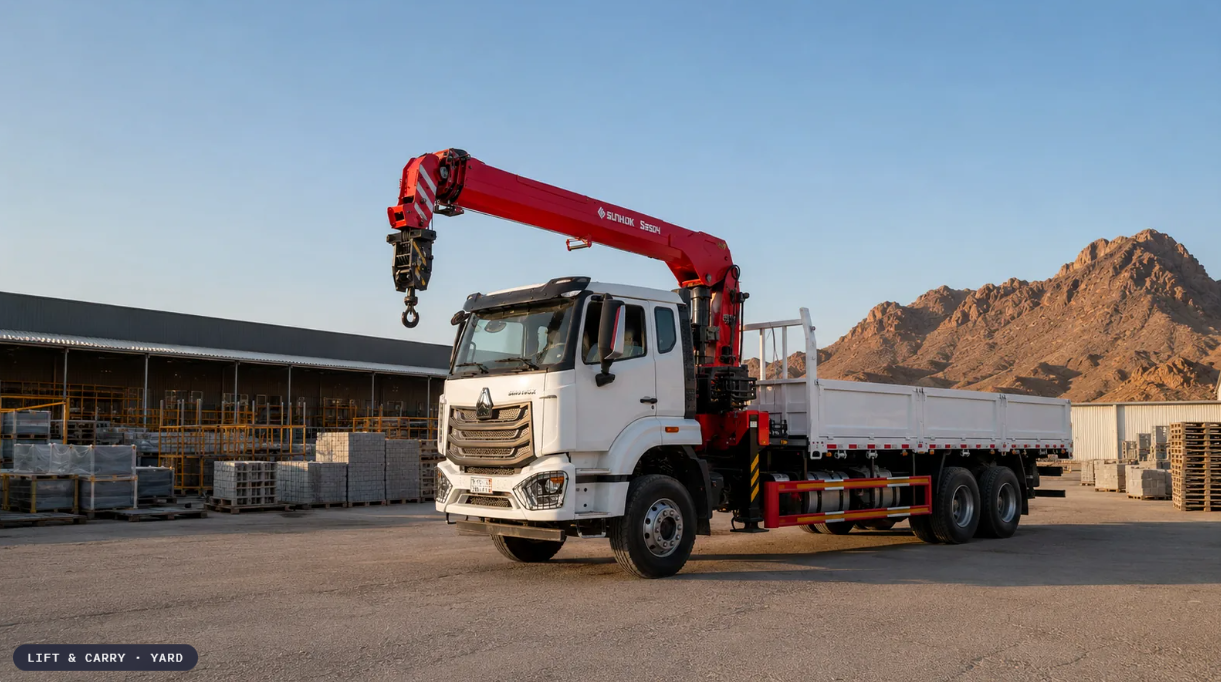
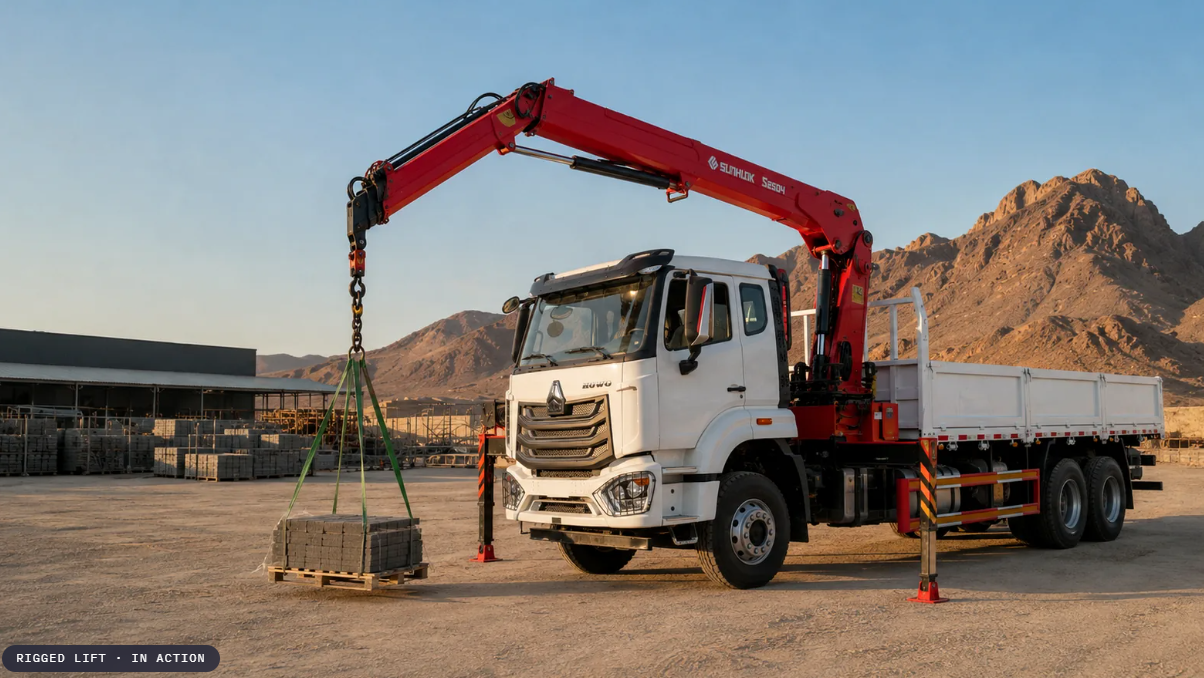
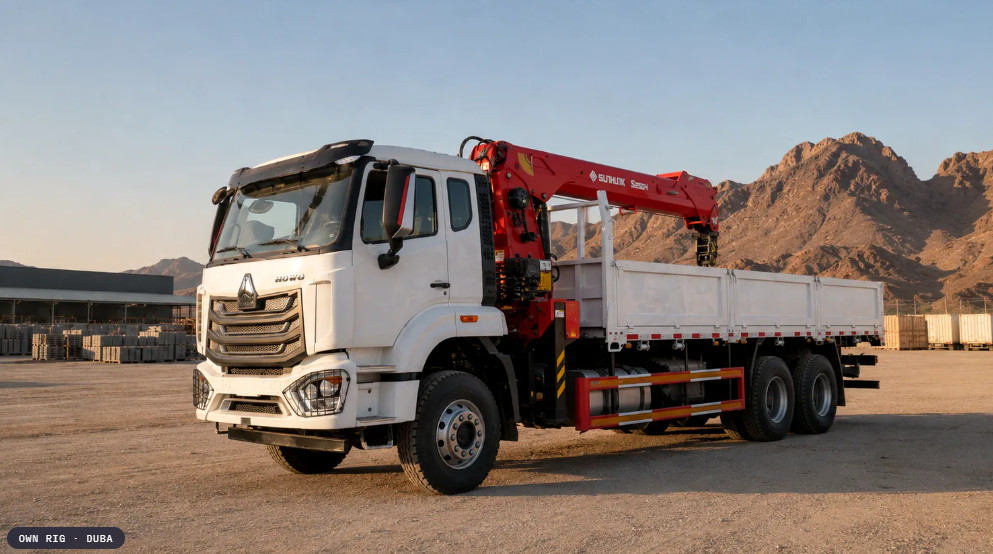
Al Tawfiq Group provides boom trucks — crane-mounted trucks that lift, load and carry in a single vehicle — across NEOM, Tabuk, Duba and the Red Sea. Site cabins, generators, materials and equipment are rigged, lifted at a planned radius and either set in place or driven to the next site on the truck’s own deck. Every lift is planned: capacity at radius, ground and outriggers, rigging and exclusion zone.
Cabin to shift or equipment to place? Send the load, site and date →
CODE
TL·05
MODE
Lift
CARRY
Deck
BASE
NEOM
FIG.01 LIFT VISUALIZER
Watch the lift, end to end.
Pick a load — the boom rigs it, lifts it and swings it onto the truck's own deck. Illustrative — capacity at radius, rigging and ground checks are confirmed per lift.
3D · DRAG TO ROTATE
RIGGING
drag to rotate · scroll to zoom
3D isn't available in this browser. A boom truck combines a crane and a carrying deck on one vehicle: the load is rigged, lifted at a planned radius, and either set in place or carried to the next site. Details are in the panel and the table below.
FIG.02
WHAT BOOM TRUCKS HANDLE
Palletized, packaged and protected.
LIFT·01
Site cabins & containers
Offices, accommodation units and boxes placed, shifted and re-placed as camps evolve.
LIFT·02
Generators & plant
Gensets, compressors and packaged units lifted into position and connected sooner.
LIFT·03
Building materials
Palletized blocks, cement and rebar bundles lifted over walls and obstacles to the workface.
CARGO·04
Equipment & skids
Crated machines and skid-mounted equipment loaded, carried and offloaded by one rig.
CARGO·05
Trailer assist
Loading and offloading lowbeds and flatbeds where no site crane exists.
CARGO·06
Water tanks & skips
Tanks, skips and site fixtures positioned exactly where the site needs them.
FIG.03
HOW A LIFT WORKS
Planned, rigged, lifted, set.
01
Load & site details
Pallet count or cargo type, weight, pickup, drops and destination.
02
Plan the lift
Capacity at radius checked; ground, access and set-down confirmed.
03
Set up
Outriggers deployed on firm ground; exclusion zone marked.
04
Rig & lift
Slings and shackles matched to the load; lifted under control.
05
Set or carry
Placed at the workface — or carried on the deck to the next site.
FIG.04
LIFT PLANNING · RIGGING · GROUND
A good lift is decided before the boom moves.
The number that governs every boom-truck job isn’t the crane’s headline capacity — it’s capacity at radius. The further the boom reaches, the less it can lift, so we plan each job around where the load sits, where it lands, and the radius between them. That’s why we ask for the weight and the positions: the answer decides the rig.
Under the boom, the lift is won on the ground. Outriggers deploy on firm, level bearing — with mats where the surface is soft — and an exclusion zone keeps people out from under the load. Rigging is matched to the load: slings, shackles and lifting points checked against the weight and shape, tag lines where the load could swing in wind.
Then comes the part only a boom truck does: the same vehicle carries what it lifts. A cabin comes off its base, rides the deck across site, and is set on new foundations by the same crew in the same visit — no separate crane hire plus transport contractor to coordinate. For loads beyond a boom truck’s reach or weight, we’ll say so and plan the right rig instead
Capacity at radius
Lift checked against reach, not just headline tonnage.
Ground & outriggers
Restraint planned to the consignment — curtains are cover only.
Rigging matched
Slings, shackles and lift points checked to the load.
Exclusion zone
Nobody under the load; area controlled through the lift.
Lift & carry
Load rides the same truck's deck between positions.
Honest limits
Beyond boom-truck range, we plan the right rig instead.
FIG.05
DECISION GUIDE
Boom truck on its own, or with a trailer?
Boom trucks work solo or as the lifting end of a transport job. Here’s how the combinations play out.
| Scenario | Boom truck (TL·05) | + Flatbed (TL·02) | + Lowbed (TL·01) |
|---|---|---|---|
| Typical job | Lift, place, shift on one site | Haul cargo + lift at both ends | Move heavy plant + assist loading |
| Load rides on | The boom truck's own deck | The flatbed deck | The lowbed well |
| Best for | Cabins, gensets, materials | Steel, containers, project cargo | Excavators, dozers, transformers |
| Crane on site? | Not needed — it is the crane | Not needed at either end | Ramp-loaded; crane if crated |
Hauling cargo that needs a lift at each end? Combine with flatbed (TL·02) → · Moving heavy plant itself? See lowbed (TL·01) →
FIG.06
QUICK FACTS
Boom-truck lifting at a glance.
| Service | Boom-truck (crane-mounted truck) lifting, loading and carrying |
|---|---|
| One vehicle | Crane and carrying deck combined — lift, carry and set with one rig |
| Typical loads | Site cabins, containers, generators, materials, equipment, tanks and skips |
| Lift planning | Capacity at radius, ground and outriggers, rigging, exclusion zone — per lift |
| Hire modes | Single lifts, day tasks and ongoing site support |
| Works with | Flatbed and lowbed transport for loading and offloading |
| Coverage | NEOM, Tabuk, Duba and the Red Sea coast; wider per job |
Exact rig, capacity at your radius and rigging plan are confirmed on quotation against the load and site. Send your lift →
WHY IT MATTERS
No site crane, no problem: the truck that delivers your load is the crane that sets it.
NEOM-approved · corridor-based · one crew, one rig, lift and carry
FIG.07
VERIFIED REGISTER
What a vendor team checks.
APPROVAL
NEOM-approved vendor
REGISTRATION
Saudi-registered — Altawfiq General Trade Est.
BASES
Duba & Tabuk, Tabuk Region
RESTRAINT
Internal strapping planned per consignment
LIFT PLANNING
Radius, ground, rigging and exclusion zone per lift
HSE & HYGIENE
Documented practices; certificates provided per quotation
Certificates and references for tender submissions are provided with each quotation and on the company facts page →
FIG.08
RELATED IN THIS DIVISION
Often booked together.
FIG.09
DISPATCH REQUEST
Tell us what you need.
Pick a service and location — we reply with availability and a price. About 60 seconds.
Your request goes to the relevant operations team. Project and commercial information is treated confidentially.
A real reply
Every RFQ gets availability and a price back.
One accountable owner
Whatever the mix of services, one point of contact.
Capability statement
Request our company profile with your enquiry.
PREFER TO TALK?
FIG.10
QUERIES
Curtain-sided questions, answered.
A truck with a crane mounted behind the cab and a carrying deck behind the crane. One vehicle rigs and lifts a load, and can then carry that same load on its deck — combining crane hire and transport in a single rig and crew.
A mobile crane only lifts — anything that must move across or between sites still needs a separate truck. A boom truck lifts and carries with one vehicle, which is faster and simpler for cabins, gensets and materials. For very heavy or very high lifts beyond boom-truck range, a dedicated crane is the right call, and we'll say so.
It depends on the radius — the horizontal distance from the crane to the load. Capacity falls as reach increases, so the same rig lifts more up close than at full stretch. Send the load's weight plus where it sits and where it lands, and we confirm the right rig for that lift.
Yes — it's the classic boom-truck job. The cabin is rigged and lifted off its base, carried on the truck's own deck, and set down on the new position by the same crew in the same visit. Whole camp relocations can be sequenced cabin by cabin.
The outriggers need firm, level bearing, so ground condition is part of every lift plan — with mats used to spread the load where the surface is soft, and the set-up repositioned if the ground can't take it. Telling us about sand, slopes or tight access up front helps us arrive ready.
Yes. Boom trucks act as the lifting end of our own flatbed (TL·02) and lowbed (TL·01) moves at sites with no crane — one contract covers the haul and the lift at both ends, with one team accountable for the whole movement.
All three: single lifts and placements, day tasks with multiple lifts, and ongoing site support where a rig works with your team on a schedule. Tell us the job type in the dispatch request and the quotation is built around it.
The load and its approximate weight, where it sits and where it lands (that gives the radius), the site and ground conditions, the date, and whether it's a single lift, a lift-and-carry, or day support. A photo or site sketch speeds the plan up.